ANIMALS EAT
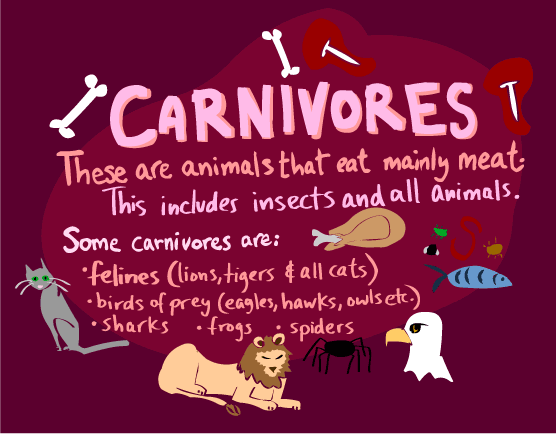
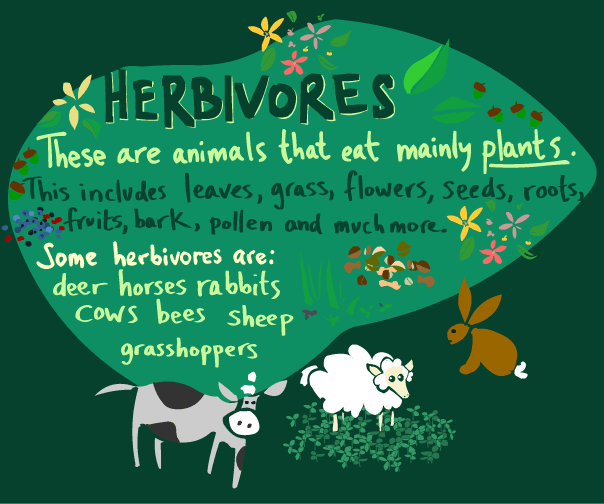
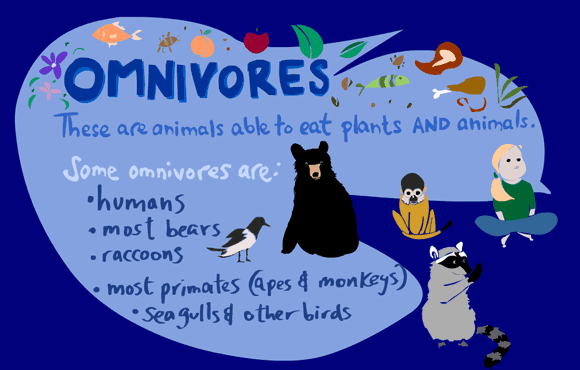
All this information is copied from:

ANIMALS REPRODUCE
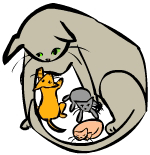 Another difference is the way animals give birth to their young (babies).
Most baby mammals
grow inside their mother until they are born. This is something that
makes mammals different, because most other kinds of animals do
something else...
Mammals and milk
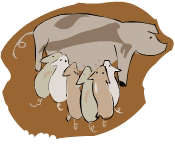 Another important characteristic is that mammal babies drink milk from their mothers until they are old enough to eat other food.
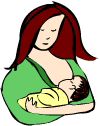
Another important characteristic is that mammal babies drink milk from their mothers until they are old enough to eat other food.
You may have seen this with mammals and their babies including humans,
who are also mammals!
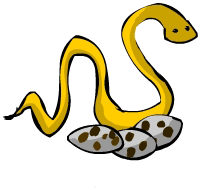
Reptiles usually lay eggs, and the babies then grow 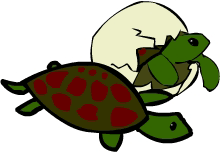 inside the egg until they are ready to come out.
Sometimes reptiles will give birth like mammals, without eggs.
inside the egg until they are ready to come out. Sometimes reptiles will give birth like mammals, without eggs.
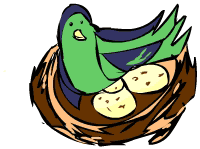
Birds also lay eggs, with a very hard outer shell. Birds generally lay 1 to 17 eggs at a time
Amphibians lay thousands and sometimes millions of small, soft eggs, and they lay them in the water! The eggs are jelly-like.
Amphibian means "double life"...
the early part of an amphibian's life is spent in the water, and
usually as they get older then they also spend time on land. Think of a
tadpole turning into a frog!!
|
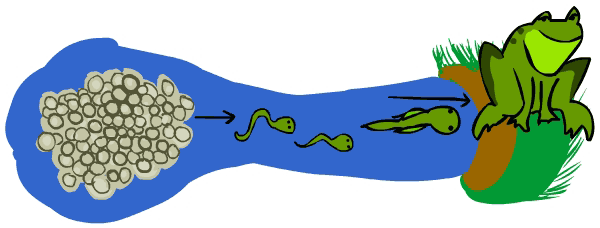
The
process amphibians go through is called "metamorphosis". Baby amphibian
looks completely different than the adult amphibians!
|
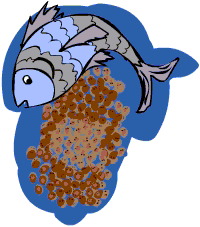
Fish also lay many many eggs - sometimes millions of tiny eggs! They are also laid in the water.
Mammals and milk
Another important characteristic is that mammal babies drink milk from their mothers until they are old enough to eat other food.
Another important characteristic is that mammal babies drink milk from their mothers until they are old enough to eat other food.
You may have seen this with mammals and their babies - including humans,
who are also mammals!
who are also mammals!
All this information is copied from the link below:
Life cycle games: frog, butterfly, bird
Life cycle movie


